

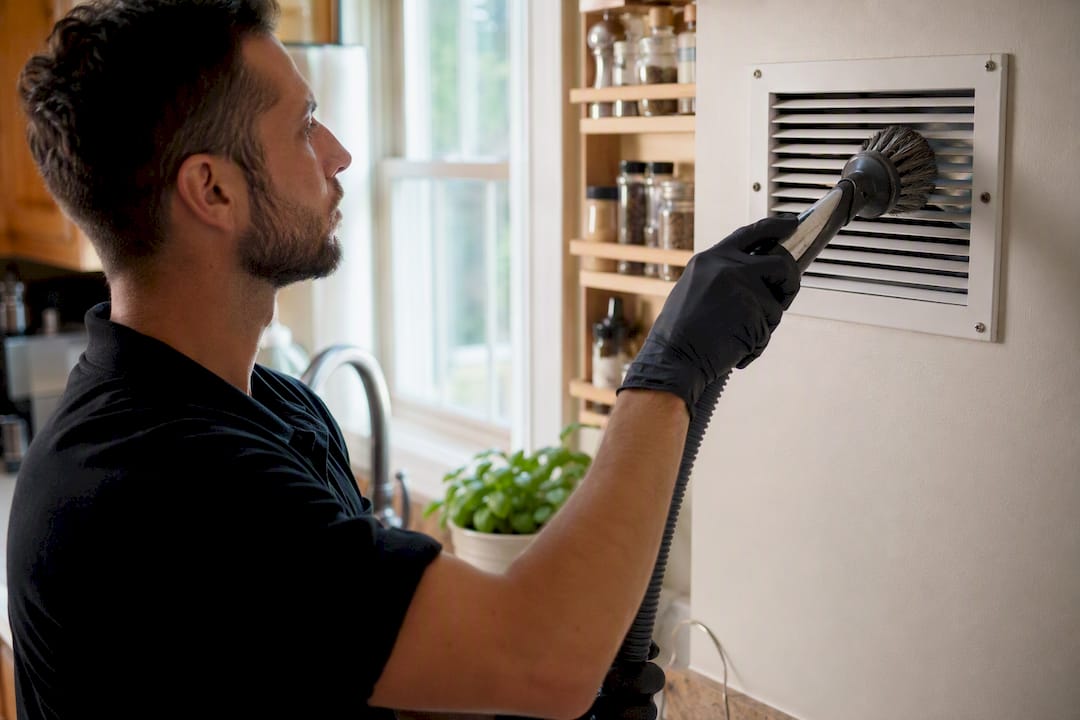
Stale indoor air almost always comes down to trapped carbon dioxide, excess moisture, or pollutants that have nowhere to go. The fix is a three-part approach: cut off the sources, move air through the house, and filter what’s left. You don’t need to buy anything to get started.
Do these three things today:
- Throw open windows on opposite sides of the house for 5 to 15 minutes (a practice Germans call lüften) to flush stagnant air completely.
- Run your bathroom and kitchen exhaust fans for a full 20 minutes after showers or cooking, not just while you’re in the room.
- Set a portable HEPA purifier running in your main living space while you tackle the bigger causes.
Key Takeaways
Stale home air is fixed by combining source control, consistent ventilation, and the right filtration, in that order, before adding equipment.
| Point | Details |
|---|---|
| Start with lüften | Open windows fully on opposite sides for 5 to 15 minutes, twice daily, before buying anything. |
| Watch your humidity | Keep indoor humidity between 30% and 50%; above 60% invites mould and musty smells. |
| Match filters to the job | Use MERV-13 or HEPA filtration for particles, and add activated carbon for odours and gases. |
| Check return airflow | Open doors or add transfer grilles so air can cycle back to the HVAC system instead of stagnating. |
| Call a pro for duct buildup | Clean Vents’ INCV-certified technicians address duct debris that can block up to 30% of airflow, with upfront pricing and a satisfaction guarantee. |
Table of Contents
- What’s actually causing my air to feel stale at home?
- Quick fixes to make stale air feel fresher today
- Should I open windows or install mechanical ventilation?
- Do I need a HEPA filter or an air purifier?
- How do I control humidity and musty smells?
- Is my HVAC system making the air feel stale?
- What does duct cleaning actually fix?
- When should I call a professional about stale air?
- Sources
- FAQ
What’s actually causing my air to feel stale at home?
That heavy, hard-to-breathe feeling in a closed room is often simple physics. Carbon dioxide builds up whenever a door stays shut and people (or pets) are breathing in the same space, and elevated CO2 has a measurable effect on alertness and how “fresh” air feels, according to research on indoor air quality. Close a bedroom door overnight and you’ll often wake up groggy for that exact reason. Opening the door, or adding a return-air grille, frequently fixes it without touching your HVAC system at all, a point Health Canada raises in its guidance on indoor air quality.
Moisture is the second big driver. Humidity that creeps above the comfortable range starts feeding the musty smell homeowners associate with “stale” air, and it’s a mould risk long before it’s visible.
Statistic callout: Indoor humidity should stay between 30% and 50% year-round. Once it holds above 60% for any length of time, mould growth becomes a real risk, per the EPA’s indoor air quality guidance.
Then there’s what you’re adding to the air without realizing it. Cooking oil, scented candles, cleaning sprays, new furniture off-gassing, and even pet dander all accumulate in a space that isn’t exchanging air with the outside. Poor indoor air quality can worsen allergy and respiratory symptoms over time, something Harvard Health Publishing points out as a reason to treat “stuffy” as more than a comfort issue.
Finally, your HVAC system might be the quiet culprit. A few common patterns to check:
- A recirculation-only system that never introduces fresh outdoor air.
- A furnace filter that’s overdue for replacement and now restricting flow.
- Return vents blocked by furniture, rugs, or a closed door.
- Ducts carrying years of dust and debris that get stirred up every time the blower kicks on.
Quick fixes to make stale air feel fresher today
None of these cost money, and most take under 20 minutes.
- Practice lüften correctly. Open windows on opposite ends of the home fully (not tilted) for 5 to 15 minutes, adjusting the duration for the season. A full-open burst clears stale air far faster than leaving a window cracked all day, and it’s more energy-efficient because you’re not bleeding heat for hours.
- Force cross-flow with fans. Point a box fan out one window while air enters from another, and run bathroom or kitchen exhausts for a full cycle rather than switching them off the moment steam clears.
- Clean the things holding odours hostage. Vacuum carpets and upholstery with a HEPA-filter vacuum, wash curtains and throw blankets, and take out trash or litter that’s been sitting more than a day.
- Run a portable purifier where you spend the most time. A HEPA unit in your living room or bedroom picks up what airing out can’t catch between sessions, particularly fine dust and allergens.
Pro Tip: Lüften twice a day (morning and evening) for two weeks straight before spending money on equipment. Most homeowners notice the difference in air quality within days, and it tells you whether your stale-air problem is really a ventilation habit, not a hardware gap.
Should I open windows or install mechanical ventilation?
Opening windows is free and immediate, but it isn’t always enough, especially in a newer, tightly sealed home where outdoor air barely leaks in on its own. Carrier’s HVAC guidance frames manual airing as a short-term fix and points to whole-home ventilators for a lasting solution.
An energy recovery ventilator (ERV) or heat recovery ventilator (HRV) continuously swaps stale inside air for fresh outside air while recovering most of the heating or cooling energy you’d otherwise lose. That trade-off matters most if you own a well-sealed, modern build, live with someone who has allergies or asthma, or simply have more people (and more closed doors) than the house was designed for.
You don’t always need that level of investment, though:
- A bathroom exhaust fan vented outdoors is usually enough if your stale-air complaint is limited to showers and steam.
- A range hood that vents outside (not just recirculates) handles cooking odours and grease particles at the source.
- Whole-home ventilation earns its cost mainly in airtight houses, larger households, or homes with persistent musty smells that airing alone won’t clear.
The trade-off with any fresh-air system is humidity. Bringing in outside air during a humid summer or a bone-dry winter changes your indoor moisture balance, which is exactly why ventilation and moisture control have to be planned together, not treated as separate problems.
Do I need a HEPA filter or an air purifier?
HEPA filters capture at least 99.97% of particles down to 0.3 microns, which covers most dust, pollen, and pet dander. For your HVAC filter, a MERV-13 rating or higher gets you similar protection for airborne allergens and fine particulate matter without needing a standalone HEPA system.
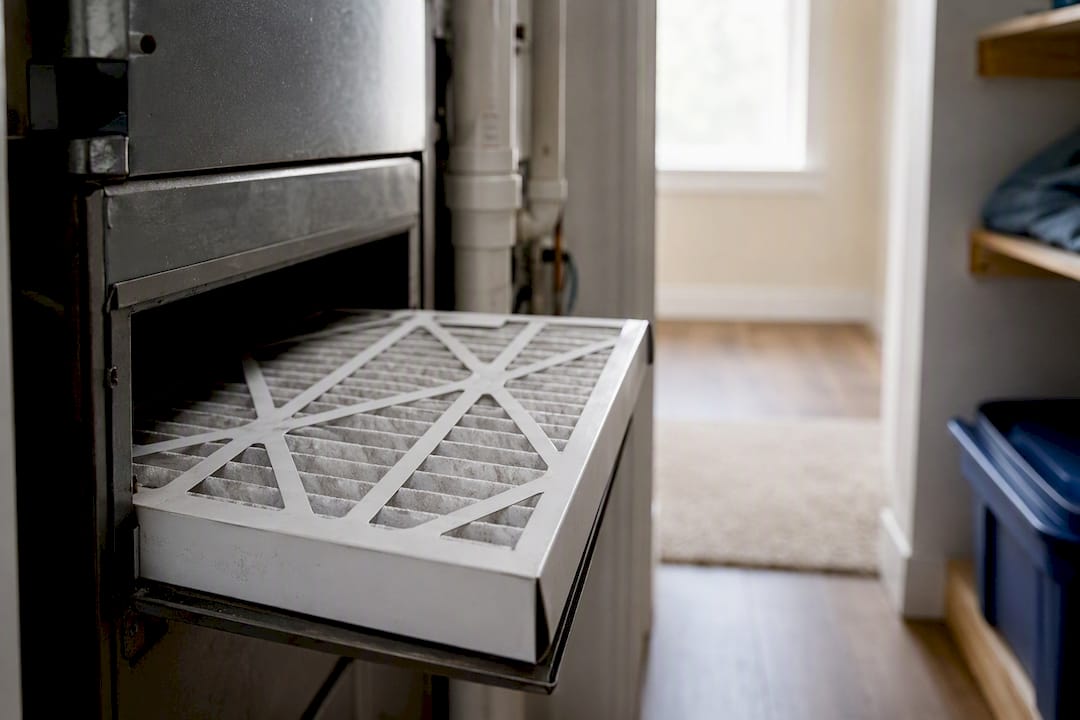
Purifiers earn their keep on particles, but they have a real blind spot: gases and odours. A basic HEPA unit does nothing for cooking smells, VOCs from paint or new furniture, or lingering smoke unless it also has an activated carbon stage, which adsorbs those gaseous compounds instead of just trapping particles.
Sizing matters more than most people think. Check the unit’s CADR (Clean Air Delivery Rate) against your room’s square footage, not just the box’s marketing claims.
Statistic callout: A common rule of thumb is to run a purifier whenever local AQI climbs above moderate levels, and to prioritize it when AQI reaches unhealthy thresholds, when fine particulate exposure becomes a genuine health concern.
Whole-house filtration through your HVAC system and a portable room unit aren’t competing choices. Running both means your ducted system handles baseline air across the whole home while a room unit tackles the space you actually occupy most.
How do I control humidity and musty smells?
A cheap hygrometer, run room by room, tells you more in an afternoon than guessing ever will. Check readings before and after airing out a room to see whether ventilation alone is solving the problem or just masking it temporarily.
- Basements and laundry rooms are the usual trouble spots. A dehumidifier sized for the square footage typically brings musty smells under control within days.
- Airtight, newer homes often get misdiagnosed as having “dry, stale air” when the real issue is trapped humidity. In that scenario, a dehumidifier improves perceived freshness more reliably than a humidifier would.
- Adding a humidifier to an already humid, poorly ventilated home usually makes musty odours worse, not better, so check your hygrometer before assuming dry air is the problem.
Is my HVAC system making the air feel stale?
Most forced-air furnaces and air handlers recirculate the same indoor air rather than pulling in fresh outdoor air, which is why filters and clear return pathways matter so much. Start with the basics.
- Check what filter is installed and swap it on schedule. A clogged filter restricts airflow and recirculates dust rather than trapping it.
- Confirm every room has a way for air to return to the system, whether that’s an open door, a transfer grille, or even a simple undercut beneath the door. Blocked returns create the stagnant pockets that feel stuffiest, a pattern Health Canada’s ventilation guidance specifically calls out.
- Listen and look before assuming duct cleaning is needed. Weak airflow from a vent, visible dust blowing out when the system starts, or a musty smell every time the furnace kicks on are all signs worth investigating further.
Pro Tip: If one room always feels stalest, check its return path first. A simple fix like undercutting an interior door to let air flow back to the system solves more stuffy-room complaints than people expect.
What does duct cleaning actually fix?
Ductwork accumulates dust, debris, and sometimes mould over years of regular operation, and that buildup can meaningfully restrict how much air actually reaches your rooms. Clean Vents, an INCV-certified air duct cleaning provider serving Laval and the surrounding region, has documented how duct debris can block up to 30% of airflow in affected systems, which lines up directly with the “stuffy no matter what I do” complaint many homeowners describe.
Restoring that lost airflow doesn’t cure every indoor air problem on its own, but where heavy debris exists, removing it produces a measurable, noticeable improvement in circulation and how fresh a home feels.
During a proper inspection, expect a technician to check supply and return vents, examine duct condition with a camera where accessible, and give you before-and-after evidence, not just a verbal assurance the job is done.
When should I call a professional about stale air?
Some symptoms mean it’s time to stop experimenting and get someone in the house. Watch for:
- Visible mould on vents, walls, or around windows.
- A musty or dusty smell that returns within a day of cleaning and airing.
- Allergy or respiratory symptoms that improve noticeably when you leave the house.
- Visible dust or debris blowing from supply vents when the system starts.
Before you book anyone, ask three questions: what certification do they carry (INCV certification is the recognized standard for duct cleaning professionals), do they provide before-and-after evidence of the work, and is pricing quoted upfront or estimated on-site after inspection.
Practical expectations: what helps most and what to try first
Source control and daily lüften solve more stale-air complaints than any device you can buy, and they cost nothing to try. Run a two-week test: air out the house morning and evening, check your furnace filter, and track a hygrometer reading each day. If the numbers and the smell haven’t budged after two weeks, that’s your signal to look at mechanical ventilation, a dehumidifier, or a duct inspection.
— Clean Vents
Clean Vents fixes what airing out can’t
Opening windows and running fans solves surface-level stuffiness, but it can’t clear ducts loaded with years of dust, mould spores, or pet dander, and it won’t fix a dryer vent choked with lint. Clean Vents is the local option for what happens after the DIY playbook runs out: INCV-certified technicians, upfront flat-rate pricing with no surprise fees, and a satisfaction guarantee on every job across Laval, Rosemère, Boisbriand, Blainville, Lorraine, Bois-des-Filion, and Sainte-Thérèse.
If your ducts are restricting airflow the way the 30% blockage data describes, or your dryer vent hasn’t been cleaned since move-in, those are jobs that airing and filtration genuinely can’t replace. Wall-mounted AC units collecting dust behind the grille cause the same recirculated staleness in the room they’re supposed to cool. Book a free online quote or call to schedule an inspection, and get a real answer on what’s actually restricting your home’s airflow before you spend another dollar on gadgets.
Sources
- Canada
- Improving indoor air quality | US EPA
- “Luften” is the German trick that makes your home smell fresher | Real Simple
- Easy ways you can improve indoor air quality | Harvard Health Publishing
FAQ
How do I fix stale air in my house?
Combine source control (remove odour and moisture sources), ventilation (lüften daily, run exhaust fans), and filtration (HEPA purifier or MERV-13 furnace filter). Most homes see improvement within a two-week routine of consistent airing and filter checks.
How can I tell if the air in my house is making me sick?
Watch for symptoms that ease noticeably when you leave the house, such as headaches, congestion, or worsening allergies and asthma, since poor indoor air quality is linked to those exact respiratory effects. Visible mould or a persistent musty smell that returns after cleaning are both signs to take seriously.
Is stale air harmful to your health?
Stale air itself isn’t toxic, but the CO2 buildup, trapped moisture, and accumulated pollutants that cause it can worsen allergies, disrupt sleep, and reduce alertness over time. Left unaddressed, especially alongside humidity above 60%, it raises the risk of mould growth, a genuine health concern.
Can stale air make you feel sick or tired?
Yes. Elevated CO2 in a closed room measurably reduces alertness and can leave you feeling groggy or headachy, which is why a stuffy bedroom often feels worse by morning. Airing the room out or improving its return airflow typically resolves it within a day.
When should I get my air ducts professionally cleaned?
Get an inspection if you notice visible dust or debris blowing from vents, a musty smell that returns quickly after airing the house out, or airflow that feels weak in specific rooms. An INCV-certified provider like Clean Vents can confirm whether duct debris is actually restricting your airflow before recommending a cleaning.