

When to hire a pro for duct cleaning (and how to pick one)
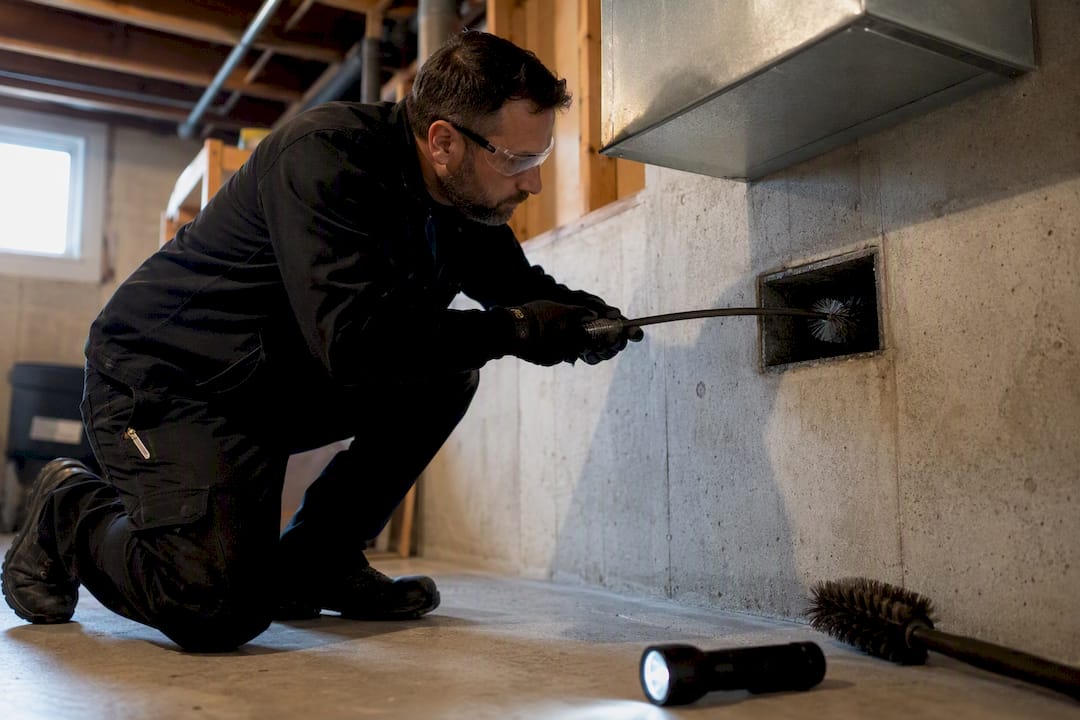
You usually don’t need routine duct cleaning. Hire a certified pro when you spot visible mould, rodent or insect activity, heavy dust buildup, persistent odours coming from your vents, dust from a recent renovation, or a noticeable drop in airflow. Both NADCA and the U.S. EPA agree that cleaning on a fixed schedule isn’t necessary for most homes. It becomes worthwhile when there’s real, visible evidence of a problem.
Before you book anyone, ask for a certified visual inspection first, and ask the company to send photos of what’s actually inside your ductwork. A reputable outfit, including Clean Vents in the Laval region, will do this without hesitation.
Your immediate next steps:
- Check your filters and registers for dust, mould, or debris before calling anyone
- Request a free visual inspection with photographic proof, not just a verbal estimate
- Ask whether the technician follows NADCA-recommended agitation and negative-pressure methods
- Confirm certification (NADCA, INCV) and get the scope of work in writing
Key Takeaways
Professional duct cleaning is worth hiring for when visible mould, pests, heavy dust, or restricted airflow appear, and the job is only as good as its proof, documentation and a whole-system approach separate a real cleaning from a quick vent vacuuming.
| Point | Details |
|---|---|
| Skip the calendar, watch for signs | Mould, pests, odour, post-renovation dust, or weak airflow justify a cleaning, not a fixed schedule. |
| Whole system, not just vents | A proper job cleans coils, blower, drain pan, and plenum, not just visible duct openings. |
| NADCA method is the benchmark | Agitation tools plus continuous negative-pressure vacuuming is the industry standard to ask for. |
| Demand proof before paying | Photographic before-and-after evidence and a walkthrough separate legitimate contractors from corner-cutters. |
| Clean Vents offers the certified route | Clean Vents provides INCV-adherent duct, dryer vent, and wall AC cleaning in Laval with transparent pricing and a satisfaction guarantee. |
Table of Contents
- What duct cleaning actually involves
- What are the signs your ducts need professional cleaning?
- How do professionals clean air ducts?
- How much does duct cleaning cost?
- How do you choose a reputable duct cleaning contractor?
- What happens on the day of service?
- How often should you clean your air ducts?
- Does duct cleaning improve health or air quality?
- Can you clean air ducts yourself instead of hiring a pro?
- Do professional duct cleaners offer any guarantee?
- The gap between marketing and method
- Book a certified duct cleaning with Clean Vents
- Sources
- FAQ
What duct cleaning actually involves
“Duct cleaning” is a misleading name for the job. A proper cleaning covers the whole HVAC system, not just the metal tubes behind your vent covers.
According to NADCA, a complete job addresses:
- Supply and return ducts, including flex and rigid sections
- Coils, blower assembly, and drain pan
- Registers, grilles, and diffusers
- The main plenum and filter housing
Cleaning only the visible vent openings leaves the rest of the system loaded with dust, pet hair, and mould spores that recirculate the moment the blower kicks on. That’s why the industry standard combines agitation, using brushes, air whips, or compressed air, with continuous negative pressure from a high-powered vacuum connected to the system. The agitation knocks contaminants loose; the vacuum pulls them out before they resettle somewhere else in the ductwork.
What are the signs your ducts need professional cleaning?
Most homes never need duct cleaning on a calendar schedule. What you’re looking for is evidence, not a due date.
- Visible mould growth inside ducts, on the coil, or around the drain pan
- Rodent droppings, shed insect casings, or other pest activity near vents
- A musty, stale, or chemical odour that seems to come from the vents themselves
- Dust that keeps piling up on furniture even with clean filters and regular housecleaning
- A recent renovation, demolition, or drywall sanding job that sent debris into the return air
- Rooms that heat or cool unevenly, or airflow that feels noticeably weaker than it used to
Any one of these on its own is enough to justify calling for an inspection. Two or three together, and you’re probably overdue. Air duct debris that builds up gradually can also choke airflow long before you notice a smell or see dust on the furniture.
How do professionals clean air ducts?
A NADCA-aligned job follows a specific sequence, and knowing it helps you tell a real cleaning from a fifteen-minute vacuum-and-go.
Technicians first seal or protect supply and return openings, then create access points if the system doesn’t already have enough. From there, agitation devices, rotating brushes, air whips, or compressed-air nozzles, dislodge debris stuck to duct walls, while hand-brushing handles tight bends and takeoffs a machine can’t reach. The whole process runs under continuous negative pressure: a HEPA-filtered vacuum connected to the system pulls loosened material out as it’s released, instead of letting it blow around your living space.
Access cuts, when needed, get professionally closed and sealed afterward, not left with a loose metal flap. Antimicrobial treatments or sealants are sometimes appropriate, for instance after mould remediation, but they’re not something every job needs, and a technician who pushes one on you before even inspecting the ducts should raise a flag.
- Agitation tools break up debris stuck to duct interiors
- A sealed, continuous vacuum connection collects what’s loosened
- Access points get cut only where necessary and closed properly after
- Chemical treatments are situational, not automatic upsells
- A visual walkthrough, ideally with photos, confirms the result
Pro Tip: Ask to see the vacuum collection unit before work starts. If it’s a shop vac instead of a truck-mounted or portable HEPA system rated for continuous negative pressure, you’re not getting a NADCA-standard clean.
How much does duct cleaning cost?
Expect a residential job to land somewhere in the range consumer-cost aggregators report, roughly $271 to $509, with larger homes and heavier contamination pushing costs higher. Some companies price per vent or per hour instead of a flat rate; either model can be fair as long as the quote is itemized.
What actually moves the number:
- Total vent count and overall home square footage
- Duct material (flexible duct usually takes longer to clean properly than rigid sheet metal)
- How accessible the ductwork is, crawlspaces and tight attics add labour time
- Visible contamination level, heavy mould or years of neglect mean more work
- Add-ons like mould remediation, pest treatment, or a video inspection report
A flat-rate quote well under that range for a whole house is one of the clearest warning signs in this industry. It usually means a company plans to clean only the first few feet of visible duct and call it done, or that they’ll show up and pressure you into expensive add-ons once they’re already inside your home.
How do you choose a reputable duct cleaning contractor?
Comparing quotes gets a lot easier once you know what to check and what to ask.
- Confirm certification, look for NADCA membership or, in Quebec, INCV standing, plus proof of liability insurance
- Ask for recent references or check standing with a consumer protection body; BBB business reviews are a reasonable starting point for gauging a local company’s track record
- Ask directly: what’s included in the scope, which components get cleaned beyond the visible vents, what agitation method they use, and how they contain debris during the job
- Request proof: before-and-after photos or a written condition report, not just a verbal “all done”
- Get the post-cleaning checklist and a walkthrough in writing before you pay
Red flags worth walking away from: a suspiciously low flat fee for a whole house, refusal to show any before-and-after evidence, and technicians who spend more time upselling sealants or sanitizers than actually cleaning. A genuine duct-cleaning specialist differs from a general HVAC contractor who cleans ducts as a side service, and that distinction is worth asking about directly.
Pro Tip: Get quotes from at least two companies and compare the actual scope, not just the price. A $150 quote and a $400 quote aren’t comparable if one covers the whole system and the other covers four vents.
What happens on the day of service?
A standard single-family home typically takes a few hours, with longer durations for larger properties, multiple HVAC zones, or heavy contamination that needs extra agitation passes.
Before the crew arrives, clear a path to your furnace, attic access, or any crawlspace vents, and move fragile items away from registers where hoses and equipment will be working. Once the job wraps up, a legitimate technician shows you the before-and-after evidence, walks you through each cleaned register, and answers questions on the spot.
- Replace your furnace filter right after the cleaning
- Keep an eye on indoor humidity for the next few weeks
- Schedule a follow-up visual check if you’re prone to mould or pest issues
How often should you clean your air ducts?
There’s no universal calendar rule here, and any company that quotes you an annual or biannual schedule without inspecting your system first is guessing. The EPA is explicit that routine cleaning on a fixed timeline isn’t backed by strong evidence for most households.
What actually determines timing is your household’s specific conditions, not the number of years since your last cleaning. A few scenarios where more frequent cleaning genuinely makes sense: homes with pets that shed heavily, households with smokers, properties near construction or heavy dust exposure, and anyone who’s had a recent renovation involving drywall, insulation, or demolition debris. If you’ve had a rodent or insect infestation anywhere near your ductwork, that’s an automatic trigger regardless of when you last cleaned.
For most homes without those factors, checking in every few years is reasonable, paired with an annual visual inspection you can do yourself: pull a vent cover, shine a flashlight in, and look for dust buildup, moisture staining, or anything that looks alive. If it looks clean, it probably is. If you see a grey felt-like coating thicker than a few millimetres, or any sign of moisture, that’s your cue to call for a proper inspection rather than waiting out a calendar.
Property managers overseeing multiple units face a different calculation. Turnover between tenants, especially after a heavy-smoking or heavy-pet occupancy, is a sensible checkpoint even without visible contamination, since the next tenant has no way to know what the ductwork has absorbed.
Does duct cleaning improve health or air quality?
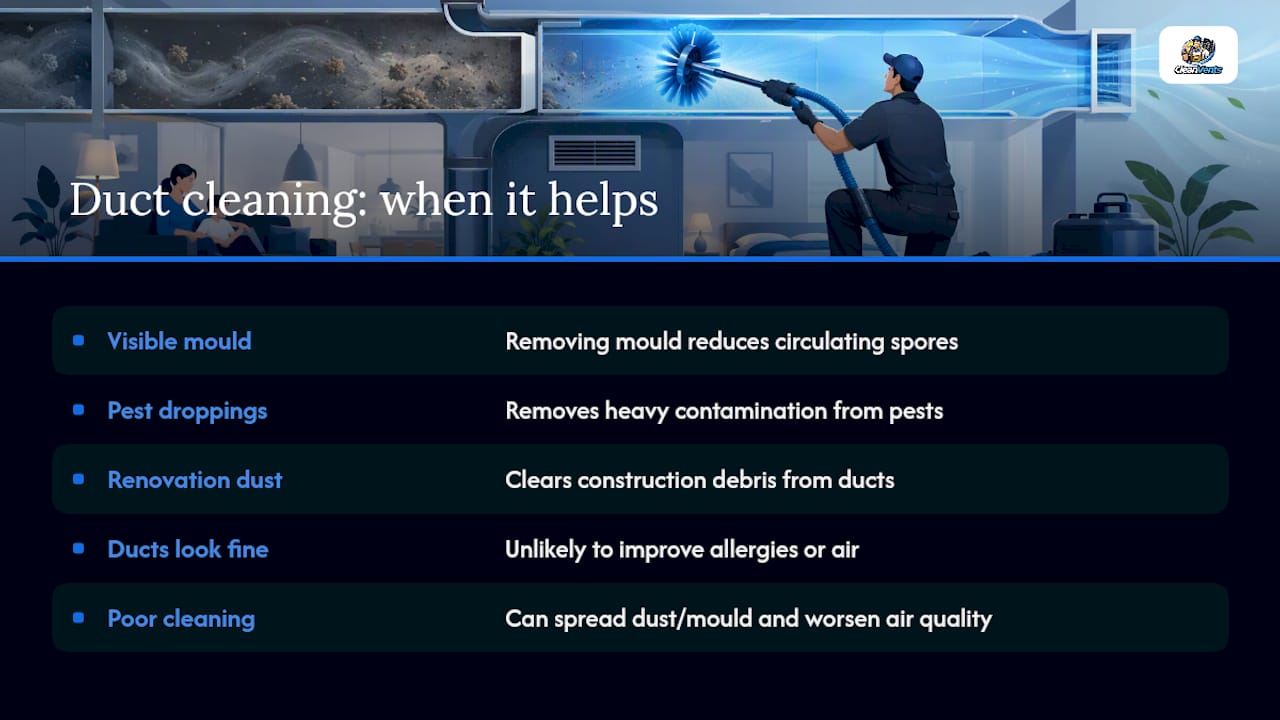
The honest answer is: sometimes, and only under specific conditions. If your ducts have visible mould growth, heavy pest droppings, or contamination from a renovation, removing that material can meaningfully reduce what’s circulating through your home’s air. Consumer guidance is consistent on this point: cleaning helps most when there’s a specific, visible problem to fix, not as a general wellness measure.
Where people get misled is assuming cleaning ducts that look and smell fine will noticeably improve allergy symptoms or general air quality. There’s no strong evidence supporting that for homes without visible contamination. If your household deals with allergies and your ducts look clean, the better first moves are usually a higher-efficiency filter, regular filter changes, and addressing humidity, not a duct cleaning appointment.
The risk side matters too. A poorly done cleaning, one without proper negative-pressure containment, can actually stir up dust and mould spores that then settle throughout your home instead of getting removed. This is the real argument for hiring certified technicians over the cheapest bid you can find: a rushed or improperly sealed job can leave your air quality worse than before the crew arrived. Improperly used antimicrobial chemicals or sealants sprayed into ductwork without adequate ventilation is another rare but real risk, which is part of why NADCA doesn’t treat those treatments as a routine step.
For most households, the health case for cleaning rests on removing a specific, identifiable hazard, mould, pests, heavy renovation dust, rather than a blanket promise of cleaner-feeling air.
Can you clean air ducts yourself instead of hiring a pro?
DIY duct cleaning has real limits, and they’re not minor ones. A shop vac and a long brush can reach maybe the first few feet of ductwork behind each register. Everything beyond that stays untouched, including the coil, blower, and the long horizontal runs where dust actually accumulates most.
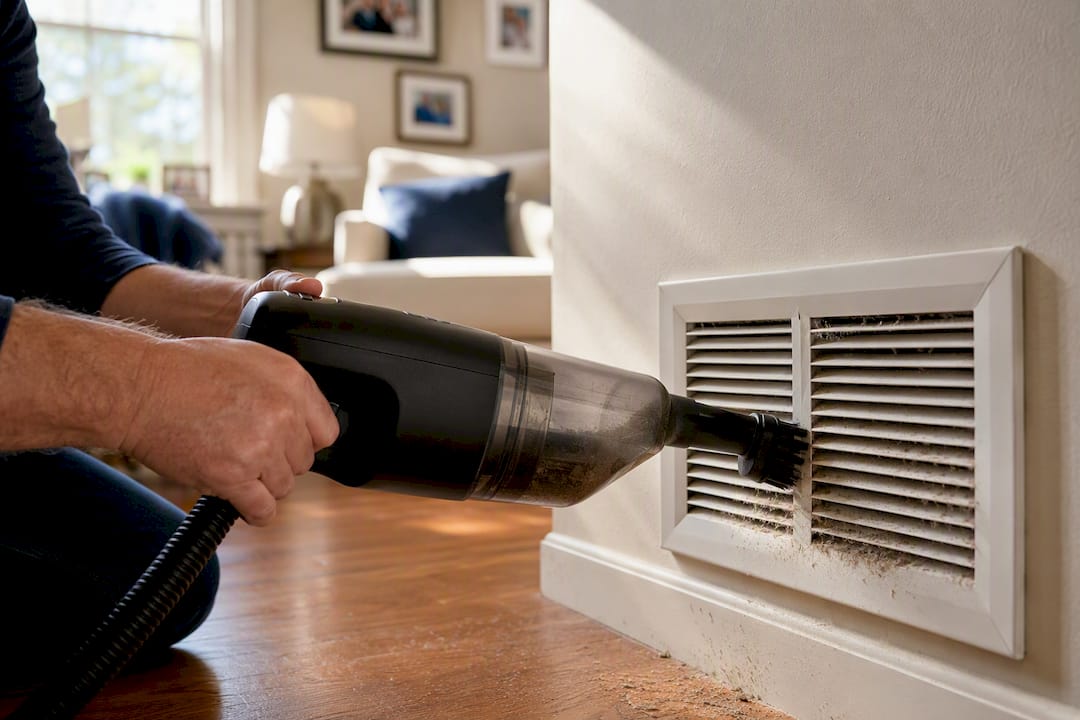
There’s also a containment problem. Professional negative-pressure equipment collects debris as it’s dislodged. A household vacuum and brush combination has no equivalent seal, which means agitating dust inside the ducts without proper suction can push contaminants out through gaps and register openings into your living space instead of removing them. You can end up with more airborne dust right after a DIY attempt than before you started.
DIY does have a legitimate, smaller role. Vacuuming visible dust off register covers, changing filters on schedule, and wiping down accessible vent grilles are all reasonable homeowner maintenance that reduces how fast contamination builds up between professional cleanings. Think of it as upkeep, not a substitute for a whole-system job.
If your ducts show any of the warning signs covered earlier, mould, pests, heavy post-renovation dust, a DIY pass isn’t going to solve the underlying problem, and in the case of mould, disturbing it without containment can spread spores rather than remove them. That’s a job for equipment and training a homeowner typically doesn’t have on hand.
Do professional duct cleaners offer any guarantee?
Reputable companies typically stand behind the work with some combination of a satisfaction guarantee, documented proof of the job, and a follow-up walkthrough, though the exact terms vary by company and you should get them in writing before booking.
At minimum, expect a written scope of work that specifies which components were cleaned, photographic or video documentation showing before-and-after conditions, and a walkthrough where the technician shows you the cleaned registers and answers questions on site. SERVPRO and similar service networks treat this documentation as standard practice, not an optional upsell, and it’s a reasonable baseline to hold any contractor to.
A satisfaction guarantee means something different from company to company. Some offer a callback within a set window if you notice dust or odour issues shortly after service; others simply commit to redoing any section that wasn’t cleaned to standard. Ask specifically what “guarantee” covers before you sign anything, rather than assuming it means the same thing everywhere.
Transparent, upfront pricing is part of this same trust picture. If a quote changes significantly once the crew is inside your home, without a clear explanation tied to something they found (extra contamination, additional access work needed), that’s a service issue worth raising immediately, not something to just accept.
The gap between marketing and method
Most of the confusion around duct cleaning comes from treating it as a single, standardized service when it’s actually a wide range of practices sold under one name. A fifteen-minute vent vacuuming and a proper NADCA-aligned whole-system clean both get advertised as “duct cleaning,” and homeowners have no easy way to tell them apart from a phone quote alone.
The conventional advice, “get your ducts cleaned every few years,” misses the point. Frequency isn’t really the variable that matters; method and verification are. A home cleaned properly once every several years is in far better shape than one cleaned poorly every year. If there’s one thing this guide argues against the grain, it’s this: stop asking “when should I clean?” and start asking “how will you prove you cleaned it properly?”
That question, more than any calendar, is what separates a contractor worth hiring from one worth skipping. Certification matters, but certification without photographic proof and a walkthrough is just a piece of paper. Ask for both, every time.
Book a certified duct cleaning with Clean Vents
Clean Vents serves Laval and the surrounding region with INCV-adherent air duct cleaning, dryer vent cleaning, and wall-mounted AC cleaning, all built around the exact verification standards covered above: upfront flat-rate pricing, a visual inspection before and after the job, and a satisfaction guarantee backing the work.
You don’t have to take a company’s word for how thorough a cleaning was. Clean Vents documents the job with photos and walks you through the cleaned registers before calling it finished, the same standard this guide recommends holding any contractor to. If your home shows any of the warning signs covered here, mould, dust that won’t quit, weak airflow, request a free quote for air duct cleaning and get a certified inspection scheduled before you commit to anyone.
Sources
- Proper Cleaning Methods | National Air Duct Cleaners Association (NADCA)
- Should You Have the Air Ducts in Your Home Cleaned? | U.S. EPA
- How Much Does It Cost to Clean Air Ducts? 2025 Data | HomeAdvisor
FAQ
Is air duct cleaning really worth the money?
It’s worth the cost when you have visible mould, pests, heavy dust buildup, or airflow problems; without those signs, the EPA notes there’s little evidence routine cleaning delivers a meaningful benefit.
Is it really necessary to have air ducts cleaned?
Not on a fixed schedule for most homes, but it becomes necessary when there’s visible contamination, pest activity, or a drop in HVAC performance that points to a blocked or dirty system.
What are the signs air ducts need cleaning?
Visible mould, rodent or insect evidence, persistent odours, dust that keeps returning despite clean filters, recent renovation debris, and noticeably weaker or uneven airflow are the clearest signs.
What are the drawbacks of duct cleaning?
A poorly executed cleaning without proper negative-pressure containment can stir up dust and mould spores instead of removing them, and unnecessary chemical treatments can add cost without benefit.
How long does a professional duct cleaning take?
A standard single-family home typically takes two to four hours, though larger homes, multiple HVAC zones, or heavy contamination can extend that timeline.
Can I clean my air ducts myself?
A shop vac and brush only reach the first few feet of ductwork behind each register, leaving the coil, blower, and long duct runs untouched, and DIY attempts risk spreading dust rather than removing it.