

Yes, dryer vent booster fans need regular inspection and periodic cleaning to stay safe and effective. Lint builds up on the impeller blades over time, and a clogged fan can’t do its job when your vent run is too long for the dryer to handle alone.
Here’s what to do right now:
- Check the external vent hood for lint buildup or a stuck flap.
- Run a short dryer cycle and feel for weak airflow at the outside vent.
- Call a professional if you notice a burning smell, unusual noise, or a cycle that won’t finish.
A restricted booster fan doesn’t just mean longer drying times. On gas dryers, blocked exhaust can push carbon monoxide back into the house, and lint accumulation is a leading cause of residential dryer fires, so this isn’t a maintenance task to put off for another season.
Key Takeaways
Booster fans require scheduled inspection and periodic professional cleaning because lint buildup on the impeller creates both a fire hazard and a drying-efficiency problem.
| Point | Details |
|---|---|
| Booster fans need periodic service | Inspect every 6 to 12 months and clean based on usage, run length, and lint load. |
| Watch for early warning signs | Longer dry times, a hot cabinet, burning smells, or fault LEDs mean it’s time to act. |
| DIY has a clear boundary | Homeowners can safely brush and vacuum ductwork, but never open the fan’s motor housing. |
| Placement affects lint load | Fans mounted too close to the dryer benefit from a secondary lint trap upstream. |
| Clean Vents offers full-service inspection | INCV-certified technicians handle power-safe cleaning, sensor calibration, and a written service report. |
Table of Contents
- What is a dryer vent booster fan cleaning job dealing with?
- Why does cleaning a booster fan actually matter?
- What are the warning signs of a clogged booster fan?
- What does a professional booster fan cleaning include?
- Can you clean a dryer booster fan yourself?
- How often should a booster fan be inspected or cleaned?
- Where should a booster fan be installed?
- How long does a booster fan cleaning take and what does it cost?
- How Clean Vents handles booster fan service
- Ready to book a professional booster fan cleaning?
- Sources
- FAQ
What is a dryer vent booster fan cleaning job dealing with?
A booster fan is a small inline motor installed partway along a dryer’s exhaust duct. It gives the airflow an extra push when the vent run is too long, too tall, or too twisted for the dryer’s own fan to clear moist air efficiently on its own.
Most manufacturers and technicians point to ductwork exceeding roughly 35 linear feet as the trigger for adding one. Vertical runs through multiple floors, tight elbows, or a duct that snakes around framing all add resistance a booster fan is built to overcome.
It’s worth separating this from a generic inline duct fan:
- Booster fans are switched on automatically, usually by a pressure switch or a current sensor that detects the dryer running.
- They shut off once the dryer stops, rather than running continuously like a bathroom exhaust fan.
- They’re sized and rated specifically for the heat and moisture a dryer produces.
Why does cleaning a booster fan actually matter?
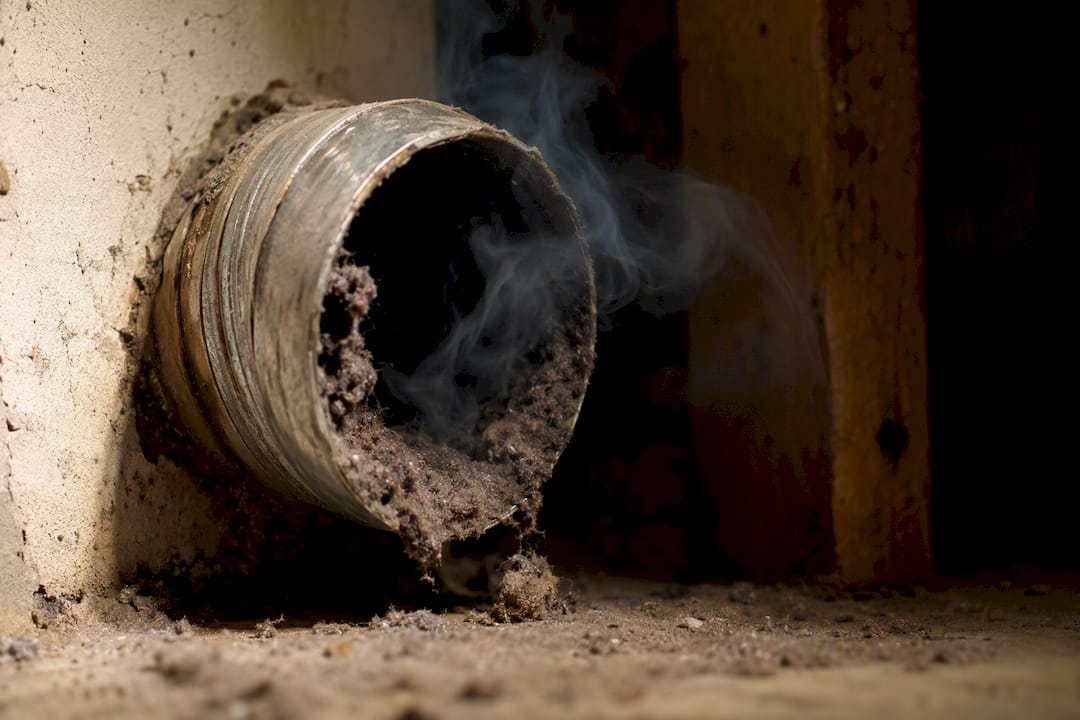
A lint-caked impeller is a fire risk sitting inside a hot, moving air stream. Dryer lint ignites easily, and a fan that’s supposed to help airflow becomes an obstruction once it’s coated in fibre. For gas dryers, that same restriction limits how much combustion exhaust actually leaves the house, raising the risk of carbon monoxide drifting back indoors.
The efficiency hit shows up before the safety hit usually does. A congested booster fan means:
- Drying cycles that run noticeably longer than they should.
- Higher electricity or gas bills from repeated reheating cycles.
- Extra thermal stress on the dryer’s own motor and heating element, which shortens its working life.
Manufacturer manuals back this up directly. Fantech’s installation and maintenance documentation calls for periodic impeller inspection, and some models specify periodic checks under normal household use.
What are the warning signs of a clogged booster fan?
Your dryer usually tells you something’s wrong before it fails outright. Watch for:
- Drying times creeping up cycle after cycle, even with a full but reasonable load.
- A dryer cabinet or exterior wall near the vent that feels noticeably hot to the touch.
- A burning or scorched smell, especially at the start of a cycle.
- Grinding, rattling, or vibration coming from the booster fan housing.
- Blinking LEDs or fault codes on the booster unit itself, which often signal it isn’t triggering properly.
Pro Tip: With the dryer running, step outside and hold a tissue or a piece of toilet paper near the exterior vent hood. If it barely moves or doesn’t flutter at all, airflow is restricted somewhere between the dryer and the outside wall.
If you smell burning, see smoke, or the dryer shuts off mid-cycle repeatedly, stop using it and call a technician. Those aren’t DIY situations, and they can point to moisture-related damage further down the vent run as well as lint buildup.
What does a professional booster fan cleaning include?
A proper service visit isn’t a quick vacuum pass. It follows a defined sequence because the goal is verified airflow, not just a tidier fan housing.
- Lock out power to the booster fan and the dryer circuit before touching anything.
- Remove extender ducts and the housing cover to expose the impeller.
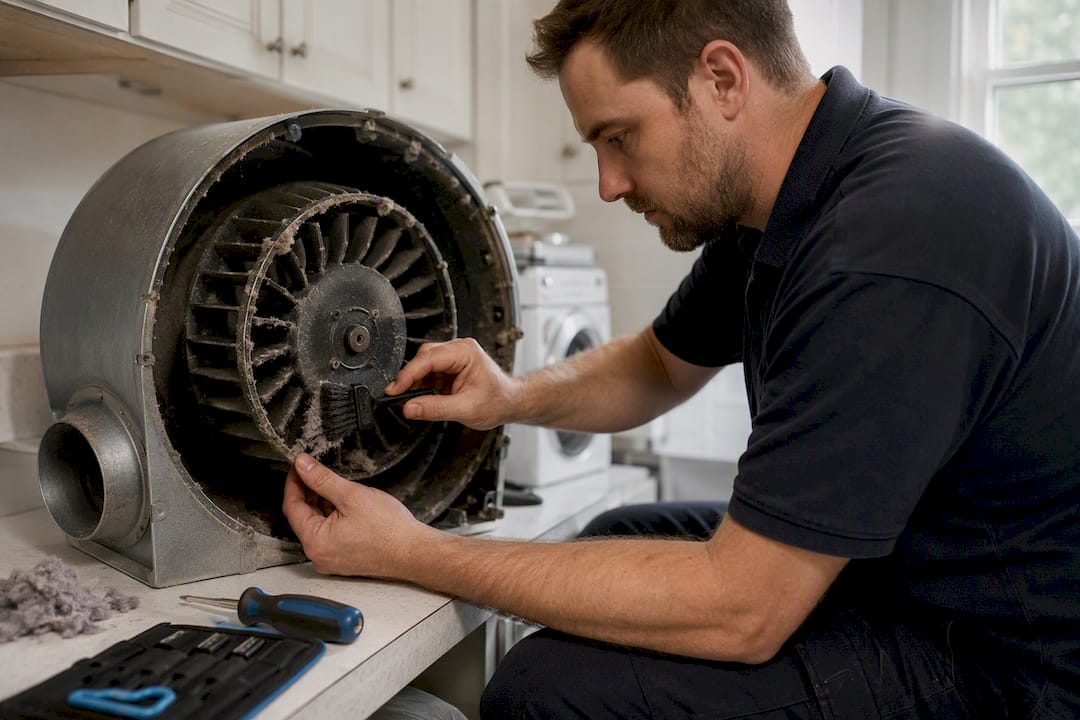
- Manually clear lint from the impeller blades and interior housing with soft brushes.
- Inspect and clean the backdraft damper and the external vent hood.
- Test and, if needed, recalibrate the pressure switch or current sensor that triggers the fan.
- Run a live dryer cycle to confirm the fan engages and airflow reaches the manufacturer’s target.
A few things separate this from a homeowner’s brush-and-vacuum routine:
- Technicians never open a sealed motor housing or attempt internal repairs on-site; that voids warranties and risks the motor.
- Tjernlund’s service manuals describe recalibrating the sensor after reassembly, since a fan that isn’t triggering at the right pressure threshold won’t protect the dryer even after cleaning.
- A completed job should come with an airflow reading or a clear pass/fail result, not just a verbal “it’s fine now.”
Can you clean a dryer booster fan yourself?
Some of this is genuinely safe to handle without a technician. The tasks below stop well short of touching the fan’s internal motor.
Tools you’ll need: a dryer vent brush kit, a shop vacuum with a flexible hose attachment, a screwdriver, and a flashlight.
- Unplug the dryer, or shut off the gas supply valve if it’s a gas model.
- Carefully pull the dryer away from the wall to access the duct connection.
- Detach the flexible or rigid duct from the back of the dryer and the wall port.
- Feed the vent brush through the ductwork, then vacuum out loosened lint from both ends.
- Check the external hood flap opens freely and isn’t nested with lint or debris.
- Reattach the duct, plug the dryer back in, and run a short cycle to confirm normal airflow.
Do not open the booster fan’s motor housing, bypass or disable its safety switches, or work on the impeller while the unit is still powered. Those steps belong to a trained technician, full stop.
How often should a booster fan be inspected or cleaned?
General guidance from appliance manufacturers lands on inspecting dryer vent systems every 6 to 12 months, with Whirlpool recommending cleaning at least once every two years as a baseline for lighter use. Booster fans on longer or more complex runs usually need more frequent attention than that baseline, depending on usage and conditions.
Several factors shorten the interval:
- Vent runs beyond 35 feet, vertical sections, or ducts with several elbows collect lint faster.
- Multi-unit buildings sharing a vent system see heavier cumulative lint load.
- Households with pets, or that dry a lot of towels and plush fabrics, generate more fibre per load.
A secondary lint trap installed upstream of the fan can stretch these intervals meaningfully by catching debris before it reaches the impeller.
Where should a booster fan be installed?
Placement affects how fast lint accumulates and how easy the unit is to service later. Several manufacturer installation manuals call for a minimum mounting distance from the dryer, commonly around 15 feet, precisely because installing a fan too close means it takes the full, unfiltered force of wet lint straight off the drum.
Best practice generally favours:
- Mounting nearer the vent termination rather than right behind the dryer.
- A vertical orientation where the layout allows it, which reduces condensation pooling inside the housing.
- Enough clearance around the unit for a technician to remove the housing without dismantling half the duct run.
Pro Tip: If your layout forces the booster fan closer to the dryer than manufacturers recommend, ask your technician about adding a secondary lint trap just upstream. It protects the impeller and cuts down how often you need a full cleaning.
How long does a booster fan cleaning take and what does it cost?
Standard cleanings typically take a moderate amount of time, depending on how easy the unit is to access and the amount of buildup inside the housing and duct.
Cost varies by region, dryer setup, and how much duct needs to be disassembled, so treat any number as a starting estimate rather than a fixed price. Expect the total to climb if the technician finds a damaged damper, needs to replace sections of duct, or recommends installing a secondary lint trap while everything is already open.
How Clean Vents handles booster fan service
Every booster fan job starts with a full power lockout, then a complete inspection of the fan, housing, damper, and vent run before any cleaning begins. Technicians manually clear the impeller and housing, check sensor calibration, and confirm airflow with a live test cycle.
What backs that process up:
- INCV-certified technicians trained on manufacturer-specific procedures for booster fan units.
- Upfront, flat-rate pricing quoted before any work starts.
- Before-and-after documentation and a written service report for your records.
- A satisfaction guarantee on completed work.
Every quote outlines exactly what’s included, and any follow-up concerns are covered under that guarantee rather than treated as a separate call.
A note on why maintenance timing matters more than people think
Booster fans fail quietly. Log the date of every check, whether it’s a homeowner’s visual glance at the hood or a technician’s full teardown, and hand internal fan work to someone trained on it.
Ready to book a professional booster fan cleaning?
Clean Vents runs booster fan cleaning as part of its dryer vent service in Laval and the surrounding area, with the same upfront pricing and INCV-certified technicians used across every job.
A booking includes an on-site inspection of the booster fan and full vent run, power-safe cleaning of the impeller and housing, sensor recalibration, before-and-after photos, and a written report you can keep on file. If the inspection turns up damaged ductwork or a case for a secondary lint trap, that gets flagged in the quote before any extra work happens.
Before you call or request a quote, have your dryer type (gas or electric), a quick summary of the symptoms you’ve noticed, and your vent’s approximate length on hand. It speeds up the assessment and gets you a more accurate price. You can book a dryer vent and booster fan cleaning directly, or ask about pairing it with a full air duct inspection if your whole HVAC system is overdue for a look.
Sources
- How to clean a dryer vent | Family Handyman
- Fantech DEDPV-705 dryer boosting kit installation and maintenance instructions
- How to clean a dryer inside and out in 9 easy steps | Whirlpool
Manufacturer manuals contain safety and mounting specifics that vary by model, and those instructions should always take priority over general guidance when you’re servicing a specific unit.
FAQ
How do you clean a dryer booster fan?
A technician locks out power, removes the housing and extender ducts, brushes and vacuums lint from the impeller, then tests and recalibrates the trigger sensor before confirming airflow with a live dryer cycle.
Do dryer vent booster fans actually work?
Yes, when properly sized and installed, they compensate for the pressure drop in long or complex vent runs and help the dryer meet its exhaust airflow requirements.
Where should the dryer booster fan be located?
Most manufacturer guidance recommends mounting it a minimum distance from the dryer, often around 15 feet, and closer to the vent termination when the layout allows for it.
Are dryer booster fans safe?
They’re safe when installed to manufacturer specifications and inspected regularly. Neglected units accumulate lint that raises fire risk and, for gas dryers, can restrict venting of combustion exhaust.
How often should I have my booster fan professionally serviced?
Aim for an inspection every 6 to 12 months, and lean toward the shorter end if you have a long vent run, pets in the home, or heavy dryer use.