

If you hear scratching, flapping, or chirping coming from your fireplace, stop everything: do not light a fire, close the damper if it is open, and seal the firebox with a board or towel. Then open one large exit in the room (a window or exterior door), darken everything else, and wait quietly. Most birds find their way out on their own once they can see a clear path to light.
Immediate do/don’t checklist:
- Do close the damper or seal the firebox opening
- Do darken the room completely and open one outside exit
- Do keep pets and children out of the room
- Do not light a fire or use smoke to drive the bird out
- Do not poke into the flue with a broom or pole
- Do not set traps or use any chemical deterrent
Pro Tip: Place a lamp or torch on the floor near the open exit, pointing outward. Birds instinctively move toward light, and this single step dramatically improves the odds of a self-rescue within 30 minutes.
Key takeaways
A bird in your chimney is almost always manageable: stop all fireplace use immediately, create a single lit exit, and call a professional if the bird is unreachable, injured, or part of an active nest protected by law.
| Point | Details |
|---|---|
| No fires, ever | Never light a fire or use smoke if a bird or nest may be in the flue. |
| Light-path exit | Darken the room, open one outside exit, place a light near it, and wait 30 minutes. |
| Active nests are protected | Persistent chick calls mean a legal active nest — leave it alone until fledged. |
| Cap costs $150–$450 | A fitted chimney cap is the most reliable way to prevent re-entry. |
| Clean Vents can help | INCV-certified chimney sweeping, inspection, and cap installation in Laval and area. |
Table of Contents
- How to tell whether it’s a trapped bird, a nesting bird, or something else
- Step-by-step: how to coax a bird out safely
- If the bird is injured or exhausted: safe handling and temporary care
- When to stop waiting and call a professional
- How to prevent birds and nests in chimneys
- Legal protections you need to know before removing a nest
- What a professional chimney service does and what to expect
- Emergency first aid steps if the bird is injured
- Which bird species are most likely to enter your chimney
- Protecting yourself from birdborne diseases during a rescue
- A perspective from Clean Vents on humane, safe choices
- Clean Vents chimney and vent services for Laval homeowners
- Sources
- FAQ
How to tell whether it’s a trapped bird, a nesting bird, or something else
The sounds and timing tell you almost everything. A trapped or disoriented bird makes frantic, irregular noises — sudden flapping against the damper, a single panicked chirp, or visible movement in the firebox. It typically appears without warning and the sounds stop and start unpredictably.
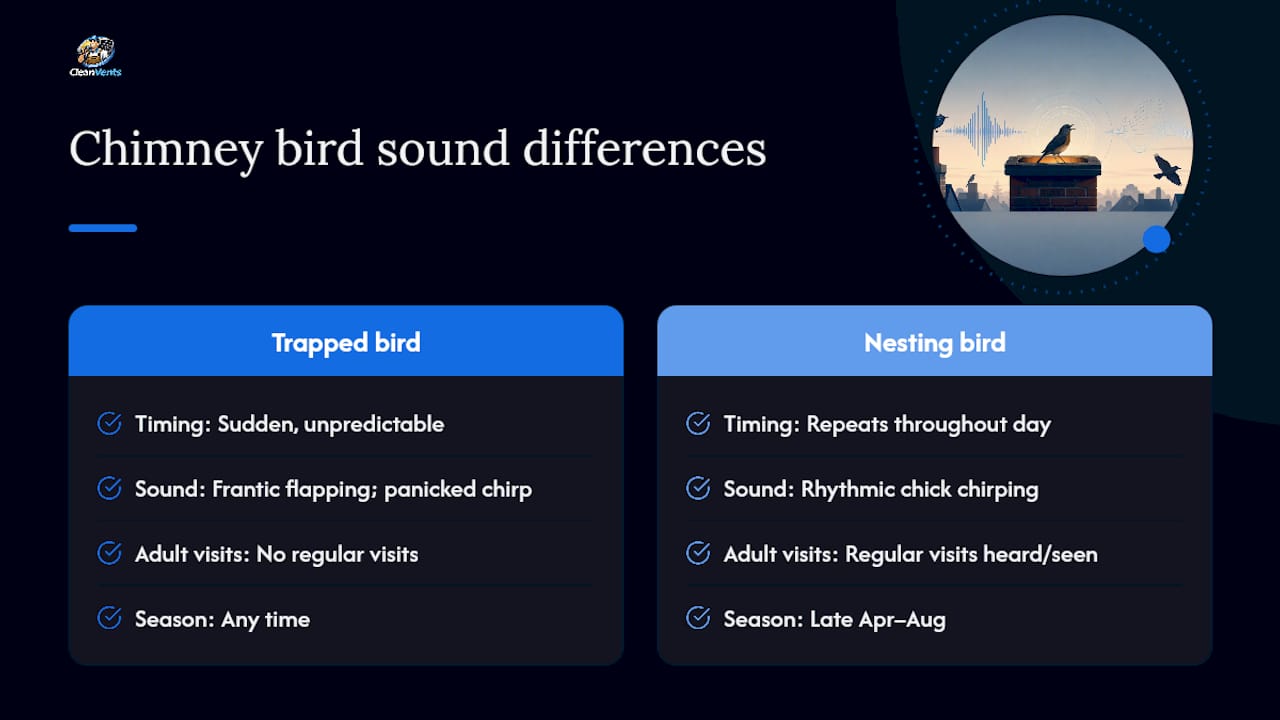
A nesting bird is a different situation entirely. Persistent, rhythmic chick chirping that repeats throughout the day, combined with regular adult visits you can hear or see at the chimney top, points to an active nest. This is most common from late April through August. Chimney swifts, which nest almost exclusively in chimneys, produce a distinctive loud chittering from their young — if that sound is coming from inside your flue during spring or summer, you are almost certainly dealing with an active nest, not a trapped bird.
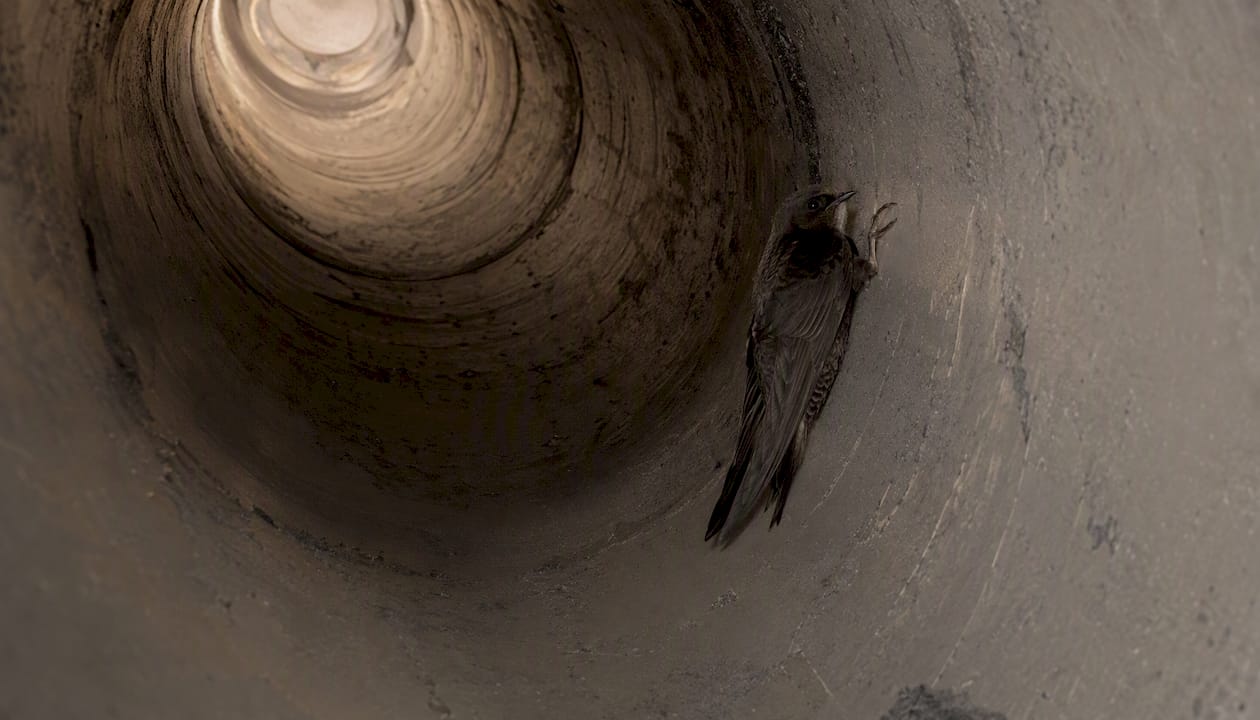
Species clues matter here. Chimney swifts are small, fast-flying birds that cling to vertical surfaces and build compact nests glued directly to the flue wall. Starlings and house sparrows also enter chimneys but tend to build bulkier nests near the top. A single adult bird that has fallen below the damper and is visible in the firebox is a rescue situation. A colony of birds with young that has been there for weeks is a legal and ethical waiting situation.
Step-by-step: how to coax a bird out safely
Follow these steps in order before attempting anything else:
- Close the damper if the bird is still in the flue and has not yet entered the firebox. If it is already in the firebox, leave the damper as-is.
- Seal the firebox opening with a board, a sheet, or a damp towel pressed against the frame to prevent the bird from entering the main room.
- Darken the entire room by closing blinds and turning off all lights. All About Birds recommends this as the single most effective first step.
- Open one large outside exit — a door or window — and close all interior doors so the bird has only one direction to fly.
- Place a light source (a lamp or torch) near the open exit, pointing outward.
- Wait quietly for at least 30 minutes. Noise and movement make the bird panic and retreat deeper into the flue.
- If the bird enters the room, stay still. It will almost always find the lit exit on its own.
Do not attempt to smoke the bird out. Bird nests are highly combustible, and chimney safety guidance is unambiguous: never use the fireplace if you suspect a nest or debris in the flue. Do not spray water into the flue, and do not poke with poles or brooms. Keep children and pets out of the room for the entire process.
If the bird is injured or exhausted: safe handling and temporary care
A bird that has been in the flue for hours may be too weak to fly out even with a clear path. Check for these signs before you attempt to handle it: soiled or matted feathers, inability to stand or hold its head up, visible bleeding or a drooping wing, or laboured breathing. A bird sitting still and not reacting to your presence is not necessarily calm — it may be in shock.
Safe handling steps:
- Put on gloves or wrap your hands in a thick towel before picking the bird up
- Cup it gently with both hands, keeping the wings folded against its body
- Place it in a cardboard box with air holes, lined with a soft cloth
- Keep the box in a warm, quiet, dark place — away from pets, children, and direct sunlight
- Do not offer food or water; an injured bird can aspirate liquids
The RSPCA advises against attempting to catch or handle birds that appear dazed or injured without professional guidance. For Canadian homeowners, the Canadian Wildlife Federation recommends contacting a licensed wildlife rehabilitator for any bird that is injured or very young. To find a rehabber near you, contact your provincial wildlife authority or search the Canadian Wildlife Health Cooperative’s regional contacts.
When to stop waiting and call a professional
Some situations are beyond what a homeowner should handle alone. Call a certified chimney sweep, licensed wildlife control operator, or wildlife rehabilitator if:
- The bird has been audible for more than 24 hours and shows no sign of leaving
- You can hear distress sounds but cannot locate the bird (it may be stuck deep in the flue)
- There is a smell of decomposition — a dead bird in an enclosed flue creates a serious odour and health problem
- You see signs of structural damage to the flue liner or damper
- The firebox is sealed or fitted and you cannot create safe access without tools
- The bird appears injured and will not or cannot move toward an exit
For nest removal, you need a certified chimney sweep — not a general contractor. For an injured or orphaned bird, contact a licensed wildlife rehabilitator. If the flue is damaged or access requires masonry work, a chimney contractor is the right call. HelpWildlife notes that when a chimney is sealed or fitted, a professional may need to create an access point, and that a dead bird left unreachable poses a decomposition risk.
Pro Tip: Before booking anyone, ask three questions: Are you certified or licensed for this specific work? Do you follow legal requirements for migratory bird protection? Do you use HEPA containment during nest removal? Any hesitation on those answers is a red flag.
How to prevent birds and nests in chimneys
The most reliable fix is a properly fitted chimney cap with a mesh screen. It blocks bird entry year-round while still allowing smoke and gases to vent freely. According to chimney service reporting, cap replacement typically costs $150–$450, and fitted caps reduce animal entry substantially. Nest removal, when it requires professional access and sweeping, typically incurs a cost that varies depending on the complexity of the job.
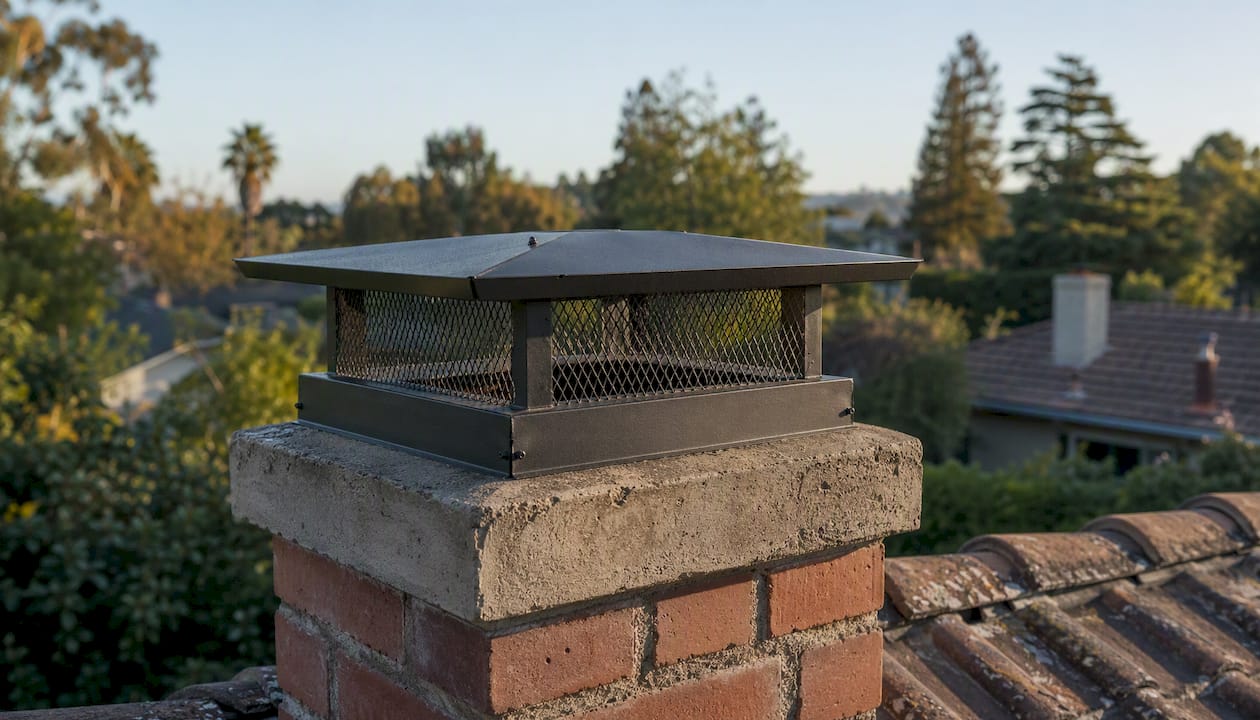
Schedule your annual sweep in late fall after the heating season, or in mid-March before nesting season begins. Maryland DNR recommends scheduling chimney cleaning after swifts have migrated to avoid disturbing active nests — a principle that applies broadly across migratory species in Canada.
Legal protections you need to know before removing a nest
Many birds that enter chimneys are protected under the federal Migratory Birds Convention Act in Canada. Disturbing an active nest, its eggs, or its young is illegal without a permit, regardless of where the nest is located — including inside your chimney.
The practical rule: if you hear persistent chick calls or see repeated adult feedings at the chimney top, treat it as an active nest and leave it alone until the young have fledged and the adults have left.
The Canadian Wildlife Federation advises leaving nesting birds alone and contacting a licensed rehabilitator for injured or very young birds. Chimney swifts in particular are a species of special concern in Canada, and their nests carry specific legal protections. If you are unsure whether a nest is active, contact your provincial wildlife authority before taking any action. A licensed wildlife control operator can also assess the situation legally and advise on next steps.
What a professional chimney service does and what to expect
A qualified chimney technician does more than sweep soot. A proper service visit for a bird-related problem typically includes:
- Video inspection of the full flue to locate the bird, nest, or debris and identify the species if possible
- Legal compliance check to confirm whether the nest is active and whether removal is permitted
- Safe removal of inactive nests and debris using HEPA-filtered containment to prevent soot and allergens from entering the home
- Thorough sweeping of the flue liner, firebox, and smoke chamber
- Cap installation or repair to prevent re-entry
- Flue liner assessment for cracks or damage that may have been caused by nest debris or animal activity
Expect the technician to ask about sounds, timing, and any smells before starting. That information helps them triage quickly and avoid disturbing a legally protected nest. A good provider will tell you upfront if the situation requires a wildlife authority referral rather than a sweep.
Emergency first aid steps if the bird is injured
If the bird is clearly injured and you need to act before a rehabber arrives:
- Contain it gently in a cardboard box with air holes and a soft cloth lining
- Keep the box in a warm room, away from drafts, noise, and pets
- Do not attempt to splint a wing or treat wounds yourself
- Do not give food or water — aspiration is a real risk with an injured bird
- Contact a licensed wildlife rehabilitator or your provincial wildlife authority immediately
- If no rehabber is reachable, a veterinary clinic can often provide emergency stabilisation
The goal of first aid is containment and warmth, not treatment. Handling should be minimal.
Which bird species are most likely to enter your chimney
Chimney swifts are the most common chimney-nesting species in Canada. They are small, dark, and fast-flying, with a distinctive twittering call. They nest colonially and return to the same chimney year after year.
European starlings are larger, glossy black birds with a yellow bill in summer. They tend to build bulky nests near the chimney top and are aggressive cavity-nesters.
House sparrows are small, brown-streaked birds that also nest near chimney openings, often using loose debris and feathers.
Pigeons and doves occasionally fall into wider chimneys, particularly older masonry flues. They are larger and easier to identify by their cooing.
If you can safely see the bird in the firebox, note its size relative to your fist, its colouring, and whether it is clinging to a vertical surface (swift) or sitting flat (most others). That detail helps a wildlife rehabilitator or chimney technician respond appropriately.
Protecting yourself from birdborne diseases during a rescue
Bird droppings, feathers, and nest material can carry pathogens including Histoplasma capsulatum (the fungus responsible for histoplasmosis), Chlamydophila psittaci (psittacosis), and various external parasites including mites and lice. The risk is low for brief, incidental contact, but higher when handling birds directly or disturbing accumulated nest material.
Protect yourself by wearing disposable gloves and, if you are disturbing nest debris, an N95 respirator. Wash your hands thoroughly after any contact. Avoid touching your face. If you develop flu-like symptoms within two weeks of handling a bird or nest material, mention the exposure to your doctor.
Professional chimney sweeps use HEPA-filtered equipment precisely because nest debris and droppings become airborne during sweeping. That containment protects both the technician and the home’s occupants.
A perspective from Clean Vents on humane, safe choices
Homeowners often feel pressure to act fast when they hear something alive in their chimney. The instinct is understandable, but patience is usually the right first move. A bird that entered on its own can almost always leave on its own, given a clear path and a quiet room.
Where Clean Vents draws the line is at the point where a homeowner is considering lighting a fire, using smoke, or poking into the flue. Those actions put both the bird and the home at risk. Our INCV-certified technicians approach every chimney call with a camera first, a sweep second, and a cap installation as the long-term answer. When the situation involves a protected species or an active nest, we refer to the appropriate wildlife authority rather than proceeding without legal clearance.
Clean Vents chimney and vent services for Laval homeowners
A bird in the flue is often the first sign that a chimney has gone too long without a professional inspection. Clean Vents offers chimney sweeping, video flue inspection, and cap installation for residential and commercial properties in Laval, Rosemère, Boisbriand, Blainville, and surrounding areas. INCV-certified technicians, HEPA containment on every sweep, and upfront flat-rate pricing — no surprises on the invoice.
If you have already resolved the immediate situation and want to make sure it does not happen again, book a chimney inspection or request a free online quote at Cleanvents. Have the chimney’s age, fuel type, and any sounds or smells ready when you call — it speeds up the triage considerably.
Sources
- Chimney Swift overview | All About Birds
- A bird is stuck in my chimney! How do I get it out?!
- How to help a trapped bird — RSPCA
- How To Remove A Bird Nest In Chimney: Costs & Safety Guide
- Maryland Department of Natural Resources — chimney swifts
For urgent injured-bird cases, contact your provincial wildlife authority or search the Canadian Wildlife Health Cooperative for a licensed rehabilitator in your region.
This article is general information, not a substitute for advice from a qualified lawyer. Consult a qualified legal professional about your own circumstances before acting on anything here.
FAQ
What does a bird in the chimney sound like?
A trapped bird typically makes frantic, irregular flapping or scratching sounds near the damper or firebox. A nesting bird — particularly chimney swifts — produces a loud, rhythmic chittering from the young that repeats throughout the day during spring and summer.
Can a bird fly out of a chimney on its own?
Yes, most can. Darkening the room, opening a single outside exit, and placing a light near that exit gives the bird a clear path and is usually enough for a healthy, uninjured bird to leave within 30 minutes, as All About Birds recommends.
Why are birds coming down my chimney?
Birds enter chimneys seeking shelter or nesting sites, particularly in older masonry flues that resemble hollow trees. Chimney swifts are the most common chimney-nesting species in Canada and return to the same chimney year after year. A missing or damaged chimney cap is the most common reason birds gain access.
What does a bird in the chimney mean (is it a bad omen)?
Practically speaking, it means your chimney likely lacks a cap or has a damaged one. It is a maintenance signal, not a superstition. A bird in the flue also raises a fire safety concern: bird nests are highly combustible, so the fireplace should stay off until the flue is inspected and cleared.
Is it legal to remove a bird nest from a chimney in Canada?
Removing an active nest — one containing eggs or young — is illegal under the federal Migratory Birds Convention Act without a permit. The Canadian Wildlife Federation advises leaving active nests alone until the young have fledged. Inactive nests can be removed by a certified chimney sweep after the birds have left.